
When Is European Wasp Season in Melbourne?
European wasps follow a yearly cycle (Agriculture Victoria; Department of Health Victoria; Australian Museum):
| Season | What's happening |
|---|---|
| Spring | A fertilised queen that survived winter starts a new nest and raises the first workers |
| Summer | Workers take over building and foraging. The nest grows in size and in wasp numbers |
| Early autumn | Peak. The nest produces new queens and males, which mate and leave to start new nests |
| Winter | Males die off and the old queen dies in late autumn. Newly fertilised queens shelter until spring |
Why Melbourne nests can be huge: In Europe, nests usually die off over winter. In Australia's milder climate, a nest can survive and keep growing over more than one season. The Victorian Department of Health warns this can result in giant nests of more than 100,000 wasps.
That's why wasp problems don't always stop when the weather cools.
How to Recognise a European Wasp
According to the Australian Museum, European wasps:
- Are 12–16 mm long, with a sturdy body
- Have bright yellow and black bands on the abdomen, with pairs of black spots on the yellow bands
- Have black antennae and two pairs of clear wings
- Are attracted to meat, sweet food and drinks
- Are more aggressive than bees when their nest is disturbed, and can sting more than once because they don't die after stinging
Because they're drawn to meat as well as sweet things, they're the ones hovering over your sausage sizzle, pet food bowl or open soft drink.
How to Find a European Wasp Nest
European wasp nests are often hidden, with only a small entrance hole showing. About 80% are in the ground, and the rest are usually in roofs, wall cavities or other sheltered parts of buildings (Department of Health Victoria).
To track down a nest:
- Put out a small piece of meat or pet food somewhere visible outdoors.
- Watch the wasps leave. Once a wasp has found food, it flies almost in a straight line back to its nest.
- Follow the flight path from a safe distance, moving the bait if needed, until you see where the wasps are going in and out.
- Look for a small hole with a steady stream of wasps. It could be in the lawn, a garden bed, a retaining wall, the eaves or a gap in brickwork.
The nest may not be on your property. The Victorian Department of Health says wasps can forage up to half a kilometre from their nest, although Monash Council notes they usually forage within 50–200 m. Lots of wasps around your yard usually means a nest isn't far away.
Never poke, dig, spray or disturb the nest, even in winter.
Why You Shouldn't Block the Hole
Blocking a nest entrance with a rock, soil, tape or expanding foam is one of the most common DIY mistakes. The ACT Government warns not to "simply block the entrance to a nest", because it aggravates the wasps and makes you more likely to be stung (ACT Government).
The ACT Government also warns against DIY methods from the internet. The Victorian Department of Health advises that nests be destroyed with a registered insecticide, ideally early in the morning or at night when wasps are less active, by someone in proper protective gear.
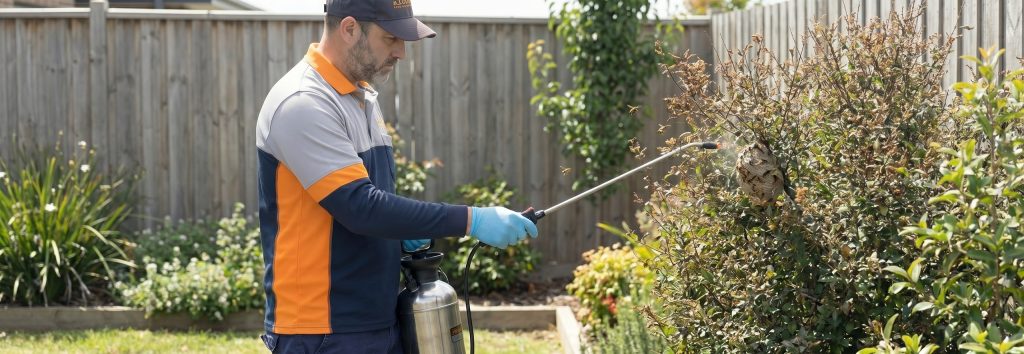
Found a nest? Leave it to the professionals. Our wasp nest removal service treats nests in the ground, walls, eaves and roofs across Melbourne. Call 03 7045 1085, 24/7.
Do Victorian Councils Still Remove Wasp Nests?
For nests on private property, generally no. Here's what some Greater Melbourne councils say:
| Council | Nest on private property? |
|---|---|
| Monash | "Council does not remove wasp nests on private property." Use a licensed pest controller |
| Whitehorse | The resident is responsible. Contact a licensed pest controller |
| Boroondara | "You are responsible for beehives or wasp nests on your property" |
| Mornington Peninsula | "The Shire does not provide a wasp removal service on private property" |
Most councils will still arrange treatment for nests on council land (parks, reserves and nature strips), so report those to your council. Policies vary, and some councils have local laws that require owners to deal with nests on their land, so check your own council's website.
How to Stay Safe During Wasp Season
Tips from Monash Council and the Victorian Department of Health:
- Drink from a glass outdoors, or use a straw with cans and bottles, as wasps can crawl inside
- Check each mouthful of food and drink when eating outside
- Cover food, compost, bins, pet bowls and birdbaths
- Pick up fallen or damaged fruit from fruit trees
- Wear shoes on the lawn, since most nests are in the ground
- Don't swat at wasps. Moving slowly away is safer
- Seal holes in walls and eaves before spring so queens can't nest there
Wasp Sting First Aid
For a normal sting, healthdirect recommends:
- Move away from the area so you don't get stung again.
- Wash the area with soap and water.
- Apply a cold pack wrapped in a cloth for about 15 minutes, and repeat if the pain continues.
Wasps usually don't leave their sting in the skin, so there's normally nothing to remove. Redness and swelling may last a few days.
When to call 000
A small number of people have a severe allergic reaction (anaphylaxis) to wasp stings. If someone has any of these signs, use their adrenaline autoinjector (such as an EpiPen) if they have one, then call triple zero (000) and follow their ASCIA action plan:
- Difficulty breathing or noisy breathing
- Swelling of the tongue or throat
- Wheeze or persistent cough
- Change in voice, dizziness or collapse
- Abdominal pain or vomiting
Monash Council also warns that stings to the face or neck, or multiple stings, can cause severe swelling or an allergic reaction. Get medical help straight away if that happens.
European Wasp FAQs
When is wasp season in Melbourne?
Will the council remove a wasp nest on my property?
Can I block a wasp nest hole?
Are European wasps dangerous?
Do wasps die in winter?
Wasp Nest Near Your Home? Get It Treated Safely
Don't risk a swarm. BattleBugs finds and treats European wasp nests across Greater Melbourne, whether they're in lawns, walls, eaves or roofs.
Or call 03 7045 1085, 24/7. Wondering about price? See our pest control cost guide.