
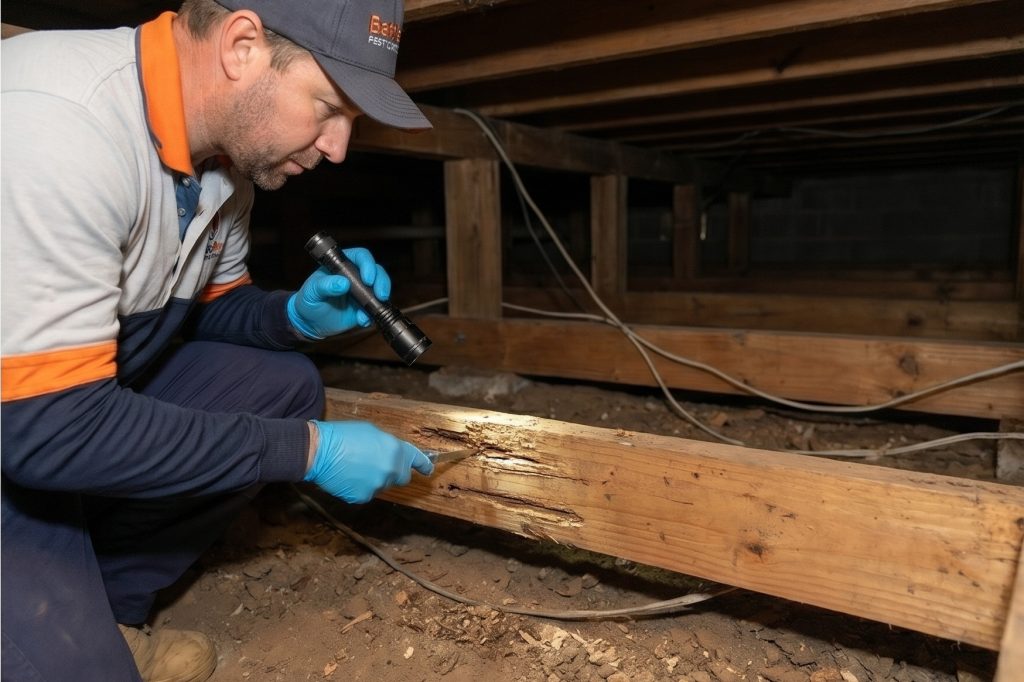
Why Termite Signs Are Easy to Miss
In Victoria, most termite damage to buildings is caused by subterranean termites of the genus Coptotermes. Victorian Department of Health guidance says this genus is widespread across the state and responsible for more than 80% of termite damage to buildings. (Victorian Department of Health)
These termites live underground or in trees and stumps, travel into buildings through hidden tunnels, and eat timber from the inside out, usually leaving the surface intact. The Victorian Building Authority notes that termite activity is often hard to detect because it usually happens in concealed areas, and recommends regularly checking in and around your home. (VBA termites guide)
Here's what to look for.
1. Mud Tubes (Termite Leads)
Subterranean termites need moisture and avoid open air, so they build tunnels of soil, saliva and droppings to travel between the ground and your timber. These mud tubes (also called "leads" or "shelter tubes") are often about the width of a pencil.
Where to look:
- Exposed slab edges and brick walls near ground level
- Subfloor piers, stumps and ant caps
- Inside the subfloor along bearers and joists
- Around service pipes and drains entering the house
The VBA lists mud-like tubes around external footings and brickwork, or around internal fittings like service pipes, as a key sign. Don't break them open. If you already have, leave the area alone and book an inspection.
2. Hollow, Soft or Damaged Timber
Termites eat timber from the inside, leaving a thin outer skin. The VBA describes weak timber that breaks easily, revealing wafer-thin layers, and notes that skirting boards are often the first point of damage.
How to check:
- Tap skirting boards, architraves and door frames with the handle of a screwdriver. Damaged timber can sound hollow or papery.
- Look for timber that dents easily or crumbles when pressed.
- Check timber in contact with the ground: fence posts, pergola posts, garden edging, sleepers and stored firewood.
3. Discarded Wings and Flying Termites
In the warmer months, mature colonies release winged termites (alates) to start new colonies. They're weak fliers and drop their wings soon after landing. Victorian Department of Health guidance notes that shed wings are a good indication that termites are present.
What to look for: small piles of identical, papery wings on windowsills, under lights, near doors or in spider webs. In Melbourne, swarms are most commonly reported from around October to December, often on warm, humid evenings.
Not sure whether you're looking at termites or ants? See Flying Termites vs Flying Ants: How to Tell the Difference.
4. Mud in Cracks, Joins or Around Fittings
Termites seal any gaps they work through with mud to keep their environment moist. You may notice:
- mud or soil-like material packed into cracks in plaster, cornices or timber joins
- mud around power points, light switches or where pipes come through walls
- small holes or cracks in timber or plaster that weren't there before
The VBA lists mud-like material around internal fittings such as service pipes and electrical plugs, and cracks or holes in timber or plaster, among the signs of termite activity.
5. Bubbling Paint or Sagging Surfaces
As termites hollow out timber behind a painted surface, moisture from their workings can cause paint to bubble, blister or crack. In more advanced cases, floors may feel spongy, or ceilings and architraves may sag. These signs can also be caused by water damage alone, so they need checking by someone who can tell the difference.
6. Doors and Windows That Suddenly Stick
Damage to door and window frames, or the moisture termites bring into timber, can make doors and windows stiff or hard to close. Like bubbling paint, it has other causes too, such as ground movement or seasonal swelling, but if it appears suddenly alongside any other sign on this list, have it checked.
Noticed one or more of these signs? A professional inspection with moisture meters and sounding tools can find hidden activity without pulling anything apart.
7. Damp Spots and Changes Along the Roofline
Termites are attracted to damp areas. The VBA specifically mentions changes in corner fascia under gutters, because overflowing or leaking gutters keep timber moist. Also watch for:
- persistent damp patches on walls or ceilings
- leaking taps, hot water units or air-conditioner drains near the house
- poorly ventilated, damp subfloors
These are "conducive conditions" rather than proof of termites, but fixing them reduces your risk.
Don't Forget the Garden
Termites often show up in the yard before the house. The VBA recommends checking trees, woodpiles and garden beds up to about 50 metres from your home for signs of an active colony. Look in old tree stumps, retaining walls, timber sleepers and garden edging.
Garden beds and mulch built up against your walls can also hide termite entry. Read Is Mulch a Breeding Ground for Termites?
Found Signs of Termites? Do This
- Don't disturb them. Don't break open mud tubes, spray insect killer or pull off damaged timber. Termites can abandon that area and keep working elsewhere in the house, where they're harder to find and treat.
- Take photos of what you've found, without disturbing it.
- Book an inspection. A licensed technician will confirm whether termites are active, identify the species, map how far the activity has spread and check your home's existing protection. Timber pest inspections should be carried out to AS 4349.3, the Australian Standard for timber pest inspections.
- Know your next steps. If termites are active, BattleBugs' inspection report documents the activity and recommended next steps, and we can refer you to a licensed termite treatment specialist.
Keep in mind that most Australian home insurance policies don't cover termite damage. See Does Home Insurance Cover Termite Damage?
How Often Should You Check for Termites?
Australian Standard AS 3660.2 calls for regular termite inspections no more than 12 months apart, with more frequent inspections where the risk is higher. The VBA gives similar advice. In between, take a quick look around the slab edge and garden every few months.
Frequently Asked Questions
What is the first sign of termites?
Can you hear termites in the walls?
What do termite droppings look like?
Are termites active in Melbourne in winter?
How much does a termite inspection cost in Melbourne?
Book a Termite Inspection in Melbourne
If you've spotted any of these signs, or it's been more than a year since your last inspection, BattleBugs can inspect your home inside and out, including the roof void, subfloor and garden, and give you a written report.
Or call 03 7045 1085, 24/7.