
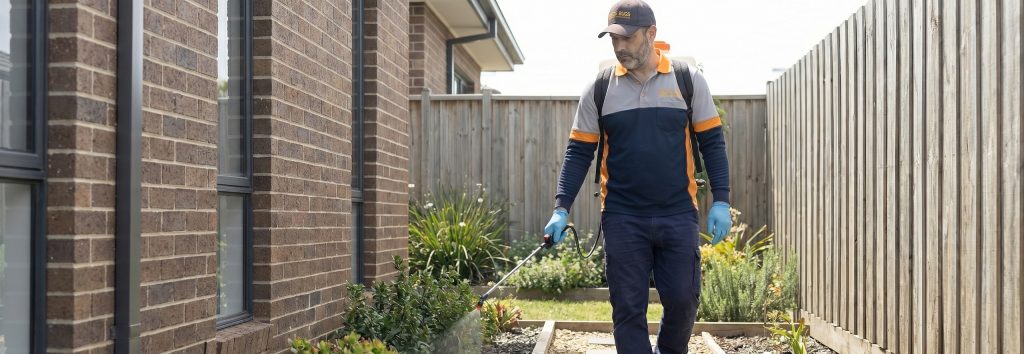
Before, During and After: The Pet Safety Checklist
Before treatment
- Tell your pest controller what pets you have, including fish, birds, reptiles and pocket pets
- Ask for the name of the product they'll use (Better Health Channel)
- Pick up pet bowls, toys, bedding and litter trays from the treatment area
- Cover or remove fish ponds and, for outdoor treatments, close doors and windows
During treatment
- Relocate pets during treatment and until the product is dry (Better Health Channel)
After treatment
- Wait for the re-entry time your technician gives you
- Open doors and windows to air the house for a few hours
- Wipe benchtops and wash bowls before refilling them
- Keep pets off treated lawns and garden beds for as long as the label or technician advises
How Long After Pest Control Can Pets Go Back Inside?
The honest answer: it depends on the product and where it was applied, so always follow your technician's instructions and the product label.
As a guide:
- Better Health Channel (Victoria) says people should stay out until the pesticide is dry, and four to six hours is generally recommended.
- The US National Pesticide Information Center (NPIC) says to keep pets away until the product is completely dry and the area is well ventilated, and notes that granular lawn products may need pets kept off for 24 hours or longer (NPIC).
Different treatments go in different places: gel baits in cracks, dusts in wall voids and roof spaces, sprays on surfaces. Ask your technician what's being used and where, so you know which areas to keep pets away from.
Cats: Why They Need Extra Care
Cats are more sensitive than dogs to permethrin and other pyrethroids, a group of insecticides used in many household and professional pest products.
- Cats break permethrin down very slowly, so it can build up in their bodies (NPIC).
- Cat Protection Society advises cat owners to avoid both synthetic pyrethroids and natural pyrethrins. It also notes that permethrin is found in many products, including fly sprays, garden insect sprays and cockroach sprays (Cat Protection Society).
- The most common way cats are poisoned is having dog flea spot-on products put on them. The APVMA requires permethrin dog spot-ons to carry a warning to keep cats away from treated dogs (APVMA).
What this means on treatment day
- Tell your technician you have a cat, and ask whether the product is a pyrethroid
- Keep cats out of treated areas until everything is dry and aired, and keep them indoors or away from treated outdoor areas as advised
- Don't use leftover dog flea products, or any product not labelled for cats, on your cat
Signs to watch for: Cat Protection lists tremors, twitching, drooling, oversensitivity to touch and sound, and loss of coordination. If you notice anything unusual after pest control, contact your vet or an emergency vet immediately and tell them what product was used.
Dogs
Dogs generally break down permethrin faster than cats (NPIC), but they love to sniff, lick and dig. Keep them off treated surfaces and garden beds until dry, and away from bait stations.
Fish Tanks and Ponds
Fish are very vulnerable to many insecticides. NPIC describes permethrin as highly toxic to fish and other aquatic animals (NPIC).
- Cover the tank completely with plastic wrap or a fitted cover so sprays and vapour can't get in
- Turn off air pumps during the treatment, as they draw room air into the water. NPIC specifically advises this when foggers are used. Ask your aquarium specialist how long your filter can safely be off
- Cover outdoor fish ponds (Better Health Channel)
- Tell your technician where the tank is so they can avoid spraying nearby
Birds
Birds are known to be sensitive to airborne irritants. The MSD Veterinary Manual lists aerosols among household products that can be irritating or toxic to caged birds (MSD Veterinary Manual). NPIC also notes that some permethrin aerosol products contain other ingredients that can harm birds.
- Move birds out of the house (or at least well away from the treated area) before treatment
- Don't bring them back until the home has been thoroughly aired
- Ask your avian vet for advice if your bird has a respiratory condition
Rabbits, guinea pigs and reptiles: Treat them the same way as birds. Move cages out of treated rooms and air the room before bringing them back.
Want a treatment plan that suits your pets? Tell us what animals you have when you request a quote, and we'll explain the products and re-entry times before we start. Call 03 7045 1085, 24/7.
Rodent Baits and Bait Stations
Rat and mouse baits are some of the biggest pet risks around the home. The RSPCA explains that most rat baits stop blood from clotting, signs of poisoning are usually delayed 3–7 days, and pets, especially cats, can also be poisoned by eating a poisoned rodent (RSPCA Knowledgebase).
The RSPCA's advice:
- Loose baits (pellets and meal) shouldn't be used
- Bait should be inside a station that children and pets can't open
- Rodent-proof your home to reduce the need for bait
2026 rule changes: The APVMA declared second-generation anticoagulant rodenticides (such as brodifacoum and bromadiolone) restricted chemical products in March 2026, and suspended their registrations for a year from 24 March 2026 while tighter controls are introduced. Ask your pest controller which rodenticide they use and how it's secured (Professional Pest Manager summary of the APVMA decision).
See our rodent control service for how we handle rats and mice in pet-friendly homes.
Questions to Ask Your Pest Controller
Better Health Channel recommends checking that whoever applies pesticides in your home holds a valid Victorian pest control licence, and asking for the full chemical name of the product so first aid can be given quickly if needed. Also ask:
- Is this product a pyrethroid? (Important if you have cats)
- Where exactly will you apply it: inside, outside, in cracks or in voids?
- How long should pets stay out, and when can bowls and bedding go back?
- Will any baits be left behind, and how are they secured?
Pet Safety FAQs
How long after pest control is it safe for pets?
Is pest control safe for cats?
Do I need to remove my fish tank?
Are cockroach gel baits safe around pets?
Book Pet-Friendly Pest Control in Melbourne
Got pets? Tell us when you book. BattleBugs services homes across Greater Melbourne, and we'll explain what we're using and when your pets can come back. Pest control from $199, with a 3-month warranty.
Or call 03 7045 1085, 24/7. Wondering about price first? See our pest control cost guide.