
What Do German Cockroach Nymphs Look Like?
German cockroach nymphs look like small, wingless versions of the adults, only darker:
- Size: About 3 mm when they first hatch, growing to around 14 mm before their final moult (Rutgers Cooperative Extension).
- Colour: Dark brown to nearly black, usually with a pale stripe down the middle of the back.
- Markings: Like adults, nymphs have two dark stripes on the shield behind the head (University of Florida).
- No wings: Only adults have wings. Nymphs moult 5–6 times as they grow, and they leave pale shed skins behind.
Adults are brown to dark brown, 13–16 mm long, with two dark parallel stripes behind the head. They have wings but don't fly (University of Florida).
Quick size check: If the "baby" you've found is already bigger than about 16 mm, it's not a German cockroach. It could be a nymph of one of the larger species that usually live outdoors and in drains. Not sure? Send us a photo.
What Baby Cockroaches Mean
One adult cockroach can be a stray that came in from outside. Baby cockroaches are different. They hatched nearby.
Here's why German cockroaches multiply so fast (Rutgers; University of Florida):
- The female carries her egg case (ootheca) with her until just before the eggs hatch. So the eggs stay protected from cleaning and sprays right up until hatching.
- Each egg case holds around 30–40 eggs, and a female produces several cases in her lifetime (4–8, depending on the source).
- Nymphs mature fast. At room temperature they can finish developing in about 60 days, and the whole life cycle takes around 100 days.
The Australian Museum describes the German cockroach as "the hardest pest cockroach to get rid of." Finding nymphs means there are breeding females nearby, and usually far more cockroaches than you've seen.
Where Baby Cockroaches Hide
German cockroaches prefer cracks, crevices and voids away from light, close to food, water and warmth. In homes they're mostly found in kitchens and bathrooms. Common hiding spots include (Rutgers; Australian Museum):
- Cupboard hinges and the corners of kitchen cabinets
- Drawers and door frames
- Behind and under the fridge, stove and dishwasher
- Inside appliances such as microwaves, toasters and coffee machines
- Warm spots near hot water units and motors
Look for tiny dark droppings (like ground pepper), shed skins and brown egg cases in these areas.
Why Sprays and Bug Bombs Don't Fix It
It's tempting to grab a can of fly spray, but:
- Sprays only hit the cockroaches you can see. Most of the population, including nymphs and egg-carrying females, is hidden in cracks.
- Repellent sprays can scatter them. Rutgers notes that pyrethroid sprays can push cockroaches into neighbouring units, which is a real issue in Melbourne apartments.
- Bug bombs (total-release foggers) don't work on German cockroach infestations, according to Rutgers, and they can be a fire hazard in homes with gas appliances.
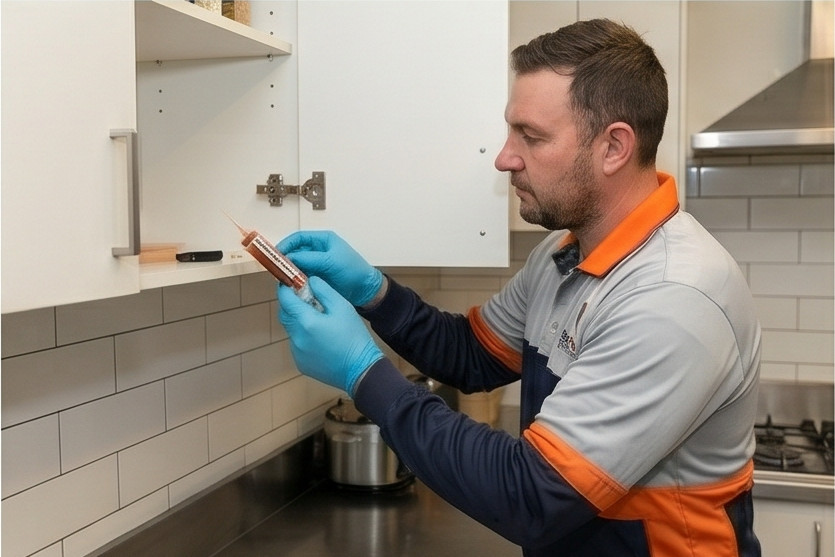
Seeing baby cockroaches? Our cockroach control service targets the whole colony, nymphs included, with gel baiting and growth regulators. Call 03 7045 1085, 24/7, or send us a photo with your quote request.
What Actually Works on German Cockroach Nymphs
Rutgers' German cockroach fact sheet recommends:
1. Gel baits. Bait is the most effective option. Gel bait placed right into cracks near where cockroaches shelter generally works better than bait stations.
2. Insect growth regulators (IGRs). IGRs don't kill cockroaches quickly, but they stop nymphs developing into breeding adults. Used alongside baits, they break the life cycle.
3. Follow-up treatments. Repeat treatment every 2–4 weeks until no cockroaches are seen for 4 weeks. Because eggs keep hatching after the first treatment, one visit is rarely enough for a German cockroach problem.
4. Inspection. A thorough inspection finds the hiding spots so bait goes where the cockroaches are, not where they aren't.
What You Can Do Today
While you wait for treatment:
- Remove food and water. Wipe benches, sweep under appliances, store food in sealed containers, and don't leave dishes or pet food out overnight.
- Fix drips. Leaking taps and damp cupboards under the sink give cockroaches water.
- Take rubbish out nightly and keep bins lidded.
- Declutter. Cardboard boxes and paper bags give cockroaches more places to hide.
- Don't spray before a baiting treatment. Many sprays are repellent to cockroaches and can work against baits. Ask your technician what to avoid before and after.
Living in an Apartment?
German cockroaches move between units through shared walls, pipes and service ducts. If you're treating one unit and the neighbours aren't, they can keep coming back. Talk to your property manager or owners corporation about treating the building together. Renting? See our pest control for property managers page.
For typical prices, check our pest control cost guide.
Baby Cockroach FAQs
What do baby cockroaches look like?
Does one baby cockroach mean an infestation?
How fast do German cockroaches breed?
Why do I keep seeing baby cockroaches after spraying?
Can baby cockroaches fly?
Get Rid of Baby Cockroaches for Good
The sooner German cockroaches are treated, the smaller the job. BattleBugs uses targeted gel baiting and growth regulators to wipe out the whole colony, with treatments from $189 and a 3-month warranty.
Or call 03 7045 1085, 24/7.